

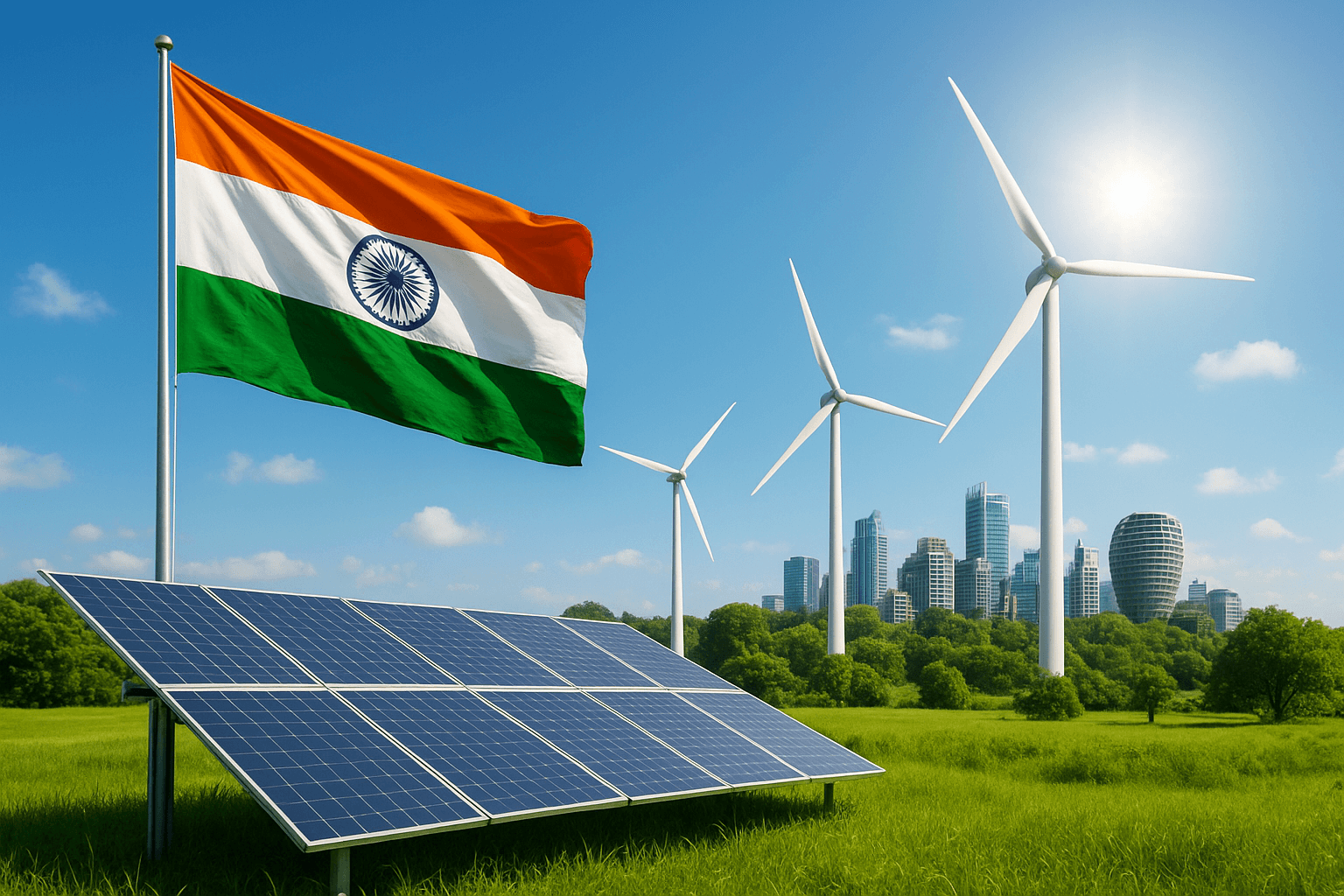
India, with its growing population and rising energy needs, stands at a critical crossroad. On one side is the traditional reliance on fossil fuels like coal and oil, and on the other is a cleaner, greener future powered by renewable energy. Over the last decade, the Government of India has made renewable energy in India a central part of its national agenda, creating ambitious government renewable energy policies, offering financial incentives, and building large-scale infrastructure to promote solar, wind, hydro, and bio-energy.
This push is not just about saving the planet; it’s about securing India’s energy independence, creating jobs, and ensuring sustainable growth. Let’s take a closer look at how India is supporting renewable energy and why it matters for the country’s future.
Why Renewable Energy Matters for India
India is the world’s third-largest consumer of energy, and demand is expected to double in the next 20 years. Traditionally, coal has powered most of the electricity grid, but coal also makes India one of the top emitters of greenhouse gases.
By investing in renewable energy in India, the government can:
-
Reduce air pollution and carbon emissions.
-
Lower dependence on imported fossil fuels.
-
Bring electricity to rural and remote areas.
-
Create millions of new jobs in solar, wind, and green manufacturing.
-
Lead the world in climate action.
The government understands these benefits and has been steadily reshaping its energy strategy to rely less on fossil fuels and more on renewables.
National Solar Mission – Lighting Up the Country
Launched in 2010 as part of the National Action Plan on Climate Change, the Jawaharlal Nehru National Solar Mission was one of the first big steps toward promoting solar power projects in India. Its goal was to make India a global leader in solar energy by encouraging large-scale solar projects and rooftop solar systems.
-
Target Expansion: Originally aimed at 20 GW of solar power by 2022, the target was later increased to a massive 100 GW.
-
Rooftop Solar Programs: The government introduced subsidies, net-metering policies, and easy financing for households and businesses to install solar panels.
-
Solar Parks: India has built dozens of solar parks, each generating hundreds of megawatts of electricity. The Bhadla Solar Park in Rajasthan, for example, is one of the largest in the world.
Today, solar power projects form the backbone of renewable energy in India, with capacity growing every year.
Harnessing the Power of Wind
Alongside solar, wind energy has been another major focus. India has vast coastal areas and inland regions with strong wind currents, making it ideal for wind farms.
-
Favorable Policies: The government introduced incentives like accelerated depreciation, tax holidays, and renewable purchase obligations to attract private investment.
-
Wind-Solar Hybrid Policy: Recognizing that solar and wind power can complement each other, the government introduced hybrid projects that use the same land and infrastructure, improving efficiency.
-
Offshore Wind: India is exploring offshore wind projects along its coasts, particularly in Gujarat and Tamil Nadu, which could further expand capacity.
Currently, India ranks among the top five countries worldwide for installed wind power capacity, making wind a strong companion to solar power projects.
Bio-Energy and Small Hydro Power
While solar and wind dominate the headlines, the government is also promoting bio-energy and small hydro projects:
-
Bio-Energy: This includes converting agricultural waste, animal dung, and other organic matter into energy. India has launched waste-to-energy projects to help manage city waste while generating electricity.
-
Small Hydro: Large dams can disrupt ecosystems, so the government is supporting smaller hydro projects (up to 25 MW) that supply clean power to local communities with minimal environmental damage.
These smaller initiatives are crucial for making renewable energy in India accessible to rural and semi-urban areas.
International Solar Alliance – India’s Global Leadership
India isn’t just thinking domestically—it is also leading global initiatives. In 2015, India, along with France, launched the International Solar Alliance (ISA). This is a coalition of over 100 countries that promotes solar energy worldwide, especially in sunny tropical regions.
The ISA aims to mobilize $1 trillion in investment for solar projects by 2030. This move shows India’s commitment to being not just a consumer but also a global leader in renewable energy.
Financial Incentives and Investments
To boost renewable energy in India, the government has introduced a wide range of financial incentives:
-
Subsidies and Grants: For rooftop solar power projects, solar pumps for farmers, and bio-energy projects.
-
Viability Gap Funding: To make large-scale renewable projects financially viable for private companies.
-
Green Energy Corridor: A project aimed at building transmission infrastructure to carry renewable power from generation sites to cities.
-
Faster Clearances: Simplified approval processes for renewable energy companies.
In addition, foreign investment is flowing in due to India’s stable government renewable energy policies. The sector has attracted billions of dollars, making it one of the most attractive renewable markets in the world.
Employment and Skill Development
One of the biggest benefits of renewable energy is job creation. From manufacturing solar panels and wind turbines to installation and maintenance, the sector is generating opportunities for skilled and unskilled workers alike.
The government has set up training programs through institutions like the National Institute of Solar Energy and skill councils to prepare India’s workforce for green jobs. This not only boosts employment but also creates a new generation of professionals in solar power projects and wind energy development.
Challenges on the Road Ahead
Despite impressive progress, India still faces challenges in scaling up renewable energy:
-
Storage: Solar and wind power are intermittent, so energy storage solutions like batteries are essential.
-
Transmission Infrastructure: Renewable power is often generated in remote areas, requiring investment in transmission lines.
-
Financing: Large-scale projects require high initial investment, and smaller companies sometimes struggle to secure funding.
-
Land Acquisition: Finding suitable land for large solar power projects and wind farms can be difficult in densely populated areas.
The government is actively working on solutions, such as investing in battery storage technology, improving the grid, and encouraging public-private partnerships.
India’s Vision for 2030 and Beyond
Looking ahead, the Government of India has set ambitious renewable energy targets:
-
500 GW of renewable energy capacity by 2030.
-
50% of energy from non-fossil sources by 2030.
-
Net-zero emissions by 2070.
These goals are supported by clear government renewable energy policies and represent a massive transformation of the energy sector. If achieved, India will not only meet its climate commitments but also become a global powerhouse in renewable energy.
Conclusion – A Brighter, Greener Future
The Government of India’s support for renewable energy is not just about reducing carbon emissions; it’s about reshaping the country’s future. Through bold government renewable energy policies, global leadership, and strong financial incentives, India is turning its renewable energy dreams into reality.
For the common citizen, this means cleaner air, reliable electricity, more job opportunities, and a healthier planet. While challenges remain, the direction is clear—India is determined to power its future with renewable energy in India, particularly through large and small-scale solar power projects.
The journey may be long, but every solar panel installed, every wind turbine set up, and every bio-energy project launched takes India one step closer to becoming a true leader in sustainable energy.
❓ Frequently Asked Questions (FAQ)
1. What is the current status of renewable energy in India?
India is one of the world’s leaders in renewable energy, with over 180 GW of installed capacity (as of 2025) from solar, wind, hydro, and bio-energy. The government aims to reach 500 GW of renewable energy capacity by 2030.
2. What are the main government renewable energy policies in India?
Key policies include the National Solar Mission, Wind-Solar Hybrid Policy, Green Energy Corridor Project, and subsidies for rooftop solar. These policies support large-scale solar power projects, rural electrification, and investment in clean energy.
3. How does the Government of India support solar power projects?
The government provides subsidies for rooftop solar panels, tax benefits for investors, viability gap funding for large projects, and encourages solar parks across the country. Programs like PM-KUSUM also help farmers install solar pumps for irrigation.
4. What role does the International Solar Alliance play?
Launched by India and France, the International Solar Alliance (ISA) brings together over 100 countries to promote solar power globally, mobilize investment, and share technology for cleaner energy solutions.
5. What are the future goals of renewable energy in India?
By 2030, India targets 500 GW of renewable energy capacity, 50% electricity from non-fossil sources, and net-zero emissions by 2070. These goals align with global climate commitments and sustainable growth.