

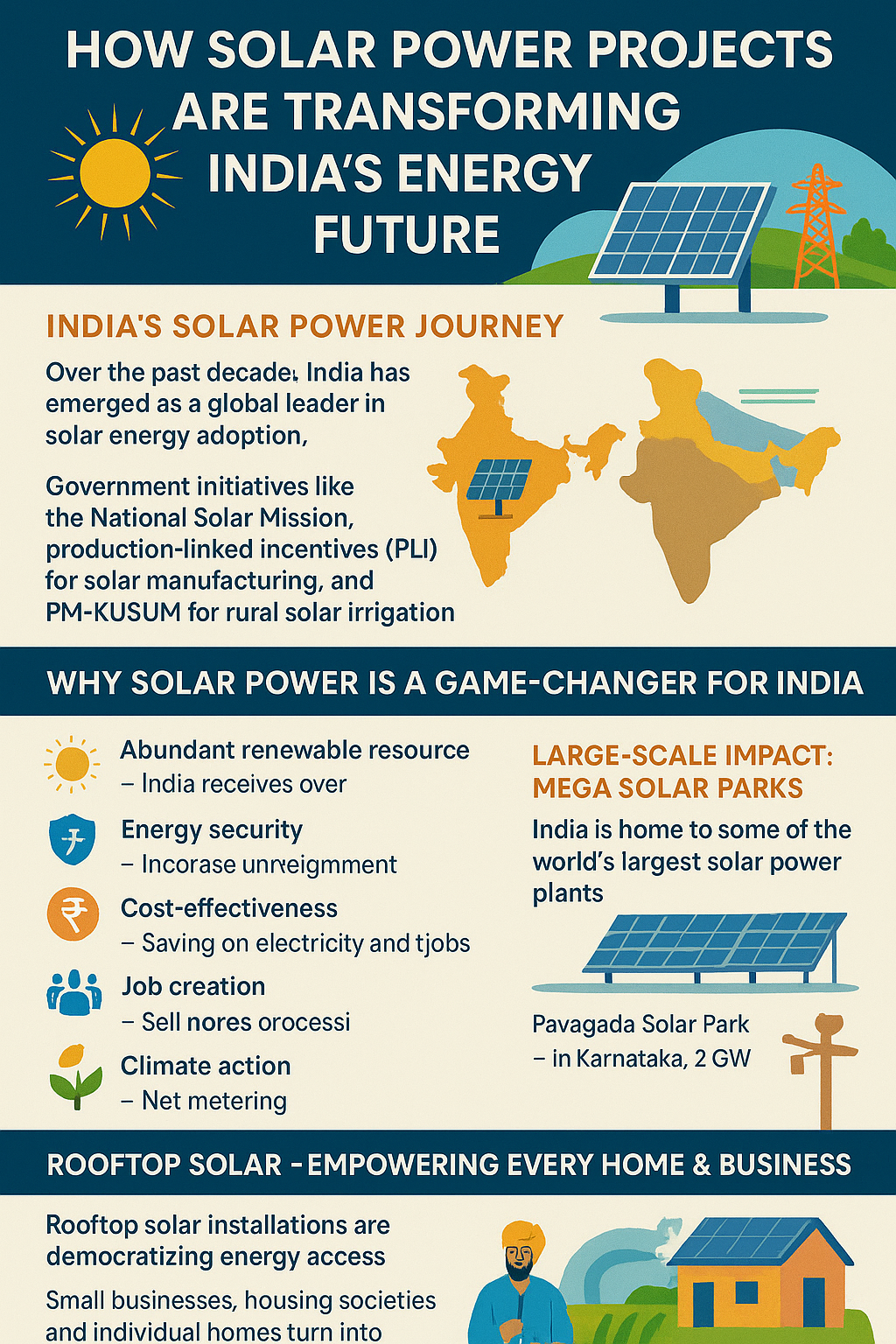
India is on the cusp of an energy revolution, and at the heart of this transformation lies solar power. With abundant sunlight, government-backed policies, and rapid technological advancements, solar energy projects are reshaping the country’s energy landscape, reducing dependence on fossil fuels, and paving the way for a cleaner, greener tomorrow.
☀️ India’s Solar Power Journey
Over the past decade, India has emerged as a global leader in solar energy adoption. From vast desert-based solar farms in Rajasthan to innovative rooftop installations in urban cities, solar projects are now reaching every corner of the nation.
Government initiatives like the National Solar Mission, production-linked incentives (PLI) for solar manufacturing, and PM-KUSUM for rural solar irrigation have created a robust foundation for accelerated growth.
🔋 Why Solar Power is a Game-Changer for India
-
Abundant Renewable Resource – India receives over 300 sunny days a year, making solar energy one of the most sustainable options.
-
Energy Security – Reducing dependence on imported coal and oil enhances national energy independence.
-
Cost-Effectiveness – Solar tariffs have dropped significantly, making it cheaper than many conventional energy sources.
-
Job Creation – From manufacturing panels to maintaining plants, the solar sector generates millions of green jobs.
-
Climate Action – Solar projects help cut carbon emissions, supporting India’s commitment to achieving Net Zero by 2070.
🌍 Large-Scale Impact: Mega Solar Parks
India is home to some of the world’s largest solar power plants, such as the Bhadla Solar Park in Rajasthan (2.25 GW capacity) and Pavagada Solar Park in Karnataka (2 GW). These mega projects supply electricity to millions of households while reducing reliance on coal-fired plants.
🏠 Rooftop Solar – Empowering Every Home & Business
Rooftop solar installations are democratizing energy access. Small businesses, housing societies, and individual homes are turning into energy producers, saving on electricity bills and even selling surplus power back to the grid through net metering.
🚜 Solar for Rural Development
Rural India is witnessing a silent revolution through solar-powered irrigation pumps, mini-grids, and cold storage facilities. Farmers are now irrigating fields, storing crops, and running agro-processing units without relying on costly diesel generators.
🔮 The Road Ahead
India aims to achieve 500 GW of renewable energy capacity by 2030, with solar expected to contribute the lion’s share. Advancements in energy storage, floating solar farms, and hybrid wind-solar projects will further boost reliability and efficiency.
🌟 Conclusion
Solar power projects are more than just an alternative energy source—they are a catalyst for economic growth, environmental protection, and energy independence. As India harnesses the power of the sun, it is not only meeting its energy needs but also setting an example for the world.